A solar proposal can make panel choices look deceptively simple: one option costs more, one option has a higher efficiency rating, and both produce electricity. The real decision in monocrystalline versus polycrystalline panels is about how much usable roof space you have, what your electricity costs, how long you expect to own the home, and whether the lower upfront price actually improves the project economics.
For most new residential systems in the United States, monocrystalline panels are the standard recommendation. That does not make polycrystalline panels a bad product. It means today’s market, equipment availability, and roof-space constraints tend to favor monocrystalline technology. A useful comparison looks beyond the panel label and considers the complete system.
What separates monocrystalline and polycrystalline panels?
Both panel types use silicon solar cells to convert sunlight into direct-current electricity. The difference starts with how the silicon is formed.
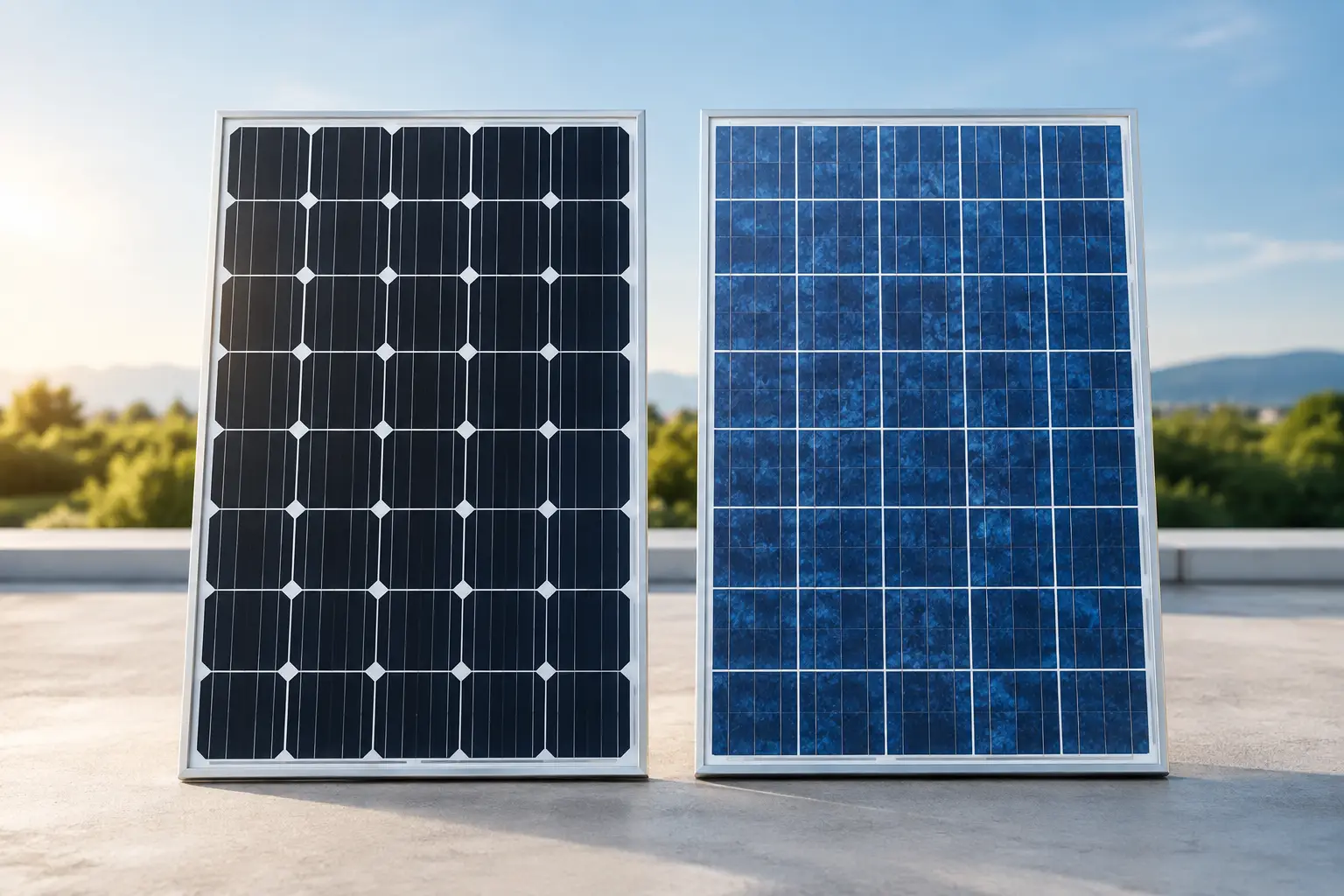
Monocrystalline cells are made from a single, highly uniform silicon crystal. They are usually black or very dark in appearance, often with clipped corners that create small diamond-shaped gaps between cells. Their orderly cell structure allows electrons to move more efficiently, which is why these panels generally produce more power from the same roof area.
Polycrystalline cells are made from multiple silicon crystals melted together. They traditionally have a blue, speckled appearance. The manufacturing process can use silicon more efficiently, which historically helped keep panel prices lower. But the boundaries between crystals slightly reduce electrical efficiency compared with monocrystalline cells.
The practical point for homeowners is simple: both can produce clean power reliably, but monocrystalline modules usually generate more watts per square foot.
Monocrystalline versus polycrystalline panels: the key differences
The gap between these technologies has narrowed over time, but it still matters when system design is tight. The comparison usually comes down to efficiency, space, upfront cost, appearance, and current availability.
Efficiency and available roof space
Modern monocrystalline residential panels commonly have efficiency ratings around 19% to 23%, with some premium models reaching higher. Polycrystalline panels are more often found in the mid-to-high teens, though actual ratings vary by model and manufacturer.
That difference matters most when your roof has limited usable space. Chimneys, skylights, vents, setbacks, dormers, and shaded areas can reduce the number of panels an installer can place. If a homeowner needs to offset a large share of electric use but has only one favorable roof plane, higher-efficiency monocrystalline panels may be the most practical way to reach the target system size.
If you have a large, unobstructed roof and moderate electricity consumption, the efficiency difference may not be decisive. A properly sized polycrystalline system can still meet your energy goals if panels are available at a meaningful savings. The question is not which panel produces more from a single square foot. It is whether the proposed array produces enough annual energy for your home at a sensible total cost.
Upfront price and real project value
Polycrystalline panels were once the clear budget option. Today, that distinction is less reliable. Manufacturing scale and market demand have made monocrystalline panels widely available, and many installers primarily stock them. In some markets, a homeowner may find little or no installed-price advantage with polycrystalline equipment because it is less common.
Do not compare panel pricing in isolation. A solar system includes racking, inverters or microinverters, electrical equipment, design work, permitting, labor, inspection, and interconnection. Those costs do not fall much just because a panel is cheaper. If a lower-efficiency panel requires more modules, more racking, or a more complex layout, its equipment savings can shrink quickly.
Ask for the total installed price, the system size in kilowatts, estimated annual production in kilowatt-hours, and the cost per watt. These figures make it easier to compare competing proposals fairly. A lower price per panel does not necessarily mean a lower cost per unit of energy produced.
Appearance on the roof
Appearance is subjective, but many homeowners prefer the uniform black finish of monocrystalline panels. All-black modules, black frames, and dark backing can create a cleaner look on a visible front-facing roof.
Polycrystalline panels are often easier to identify because of their blue cell color and mottled texture. That visual difference has no direct impact on your utility bill. It can matter, however, if curb appeal is part of the decision or if your homeowners association has design expectations. Review a product image and ask the installer to show the proposed array layout before signing a contract.
Performance in heat, shade, and real conditions
Solar panels produce less electricity as cell temperatures rise. This is normal, and it affects every module. Monocrystalline panels often have slightly better temperature coefficients than comparable polycrystalline models, meaning their output may decline a bit less during high heat. The difference is usually modest, but it can add up over years in hot climates with strong sun.
Neither panel type solves a shading problem. A tree branch, plumbing vent, neighboring home, or chimney can reduce production significantly, especially if shade falls across cells during the middle of the day. System design matters more than cell type here. Panel placement, array separation, module-level power electronics, and tree management can have a larger effect on real output than choosing one silicon format over another.
Production estimates should account for your roof orientation, tilt, local weather, shading, and utility rate structure. A south-facing roof is often favorable, but east-west arrays can also make strong financial sense, particularly where late-afternoon electricity is more valuable.
Warranties and expected lifespan
A panel’s technology label does not tell you everything about durability. Both monocrystalline and polycrystalline panels have historically been capable of long service lives when made by reputable manufacturers and installed correctly.
Read two separate warranties. The product warranty covers defects in materials and workmanship. The performance warranty addresses how much rated output the panel should retain over time. Many current residential products include product coverage of 20 to 25 years and performance commitments extending 25 years or longer, but terms vary.
Pay attention to the manufacturer, the installer’s workmanship coverage, and the inverter warranty. A solar system is not just a collection of panels. Roof attachments, flashing, wiring, monitoring equipment, and electrical workmanship all affect long-term performance. The best panel on paper cannot compensate for poor design or installation.
Why polycrystalline panels are less common in new home systems
Polycrystalline technology is not obsolete, but it has become less prominent in the residential market. Manufacturers have invested heavily in monocrystalline production and newer cell designs because homeowners and installers value high power ratings in compact spaces. As a result, monocrystalline inventory is typically easier to source, and installers are more likely to have experience designing with it.
That market shift affects replacement planning, too. If you are adding to an older system or replacing damaged modules, matching an existing polycrystalline panel may be harder than it once was. Compatibility involves more than physical dimensions: voltage, current, inverter limits, mounting hardware, and code requirements need to be evaluated by a qualified professional.
Which panel type makes sense for your home?
Choose monocrystalline panels when roof space is limited, your electricity use is high, visual consistency matters, or you want the broadest selection of current residential equipment. They are usually the straightforward choice for a new rooftop project.
Consider polycrystalline panels if you have ample open roof space and receive a clearly lower installed-price quote from a reputable installer. This may also be relevant for an existing system expansion where matching equipment is beneficial. Verify the expected annual production, warranty coverage, and availability before assuming the lower panel price creates better value.
There are also situations where neither choice should be the first conversation. A roof nearing the end of its life may need replacement before solar installation. Heavy shade may call for design changes or tree work. A home with low annual electricity use may need a smaller system, regardless of panel type. And if your utility’s compensation rules make exported electricity less valuable, the right system size can matter more than maximizing every available square foot.
Questions to ask before approving a solar proposal
A clear proposal should let you compare systems without relying on marketing labels. Ask the installer what panel model is being quoted, its efficiency rating and temperature coefficient, and whether substitutions are possible if inventory changes. Confirm the proposed system size, expected first-year production, annual degradation assumption, and how shading was modeled.
Also ask how the design affects your roof warranty, what happens if a panel or inverter fails, and which company will handle service after installation. If two proposals use different panel types, compare their estimated annual kilowatt-hours and total installed price before focusing on brand names or color.
A solar purchase should fit your roof, your electric use, and your financial priorities. For many homeowners, monocrystalline panels will provide the strongest balance of output and space efficiency. The right decision is the one supported by a transparent system design and realistic production estimate, not a panel label alone.