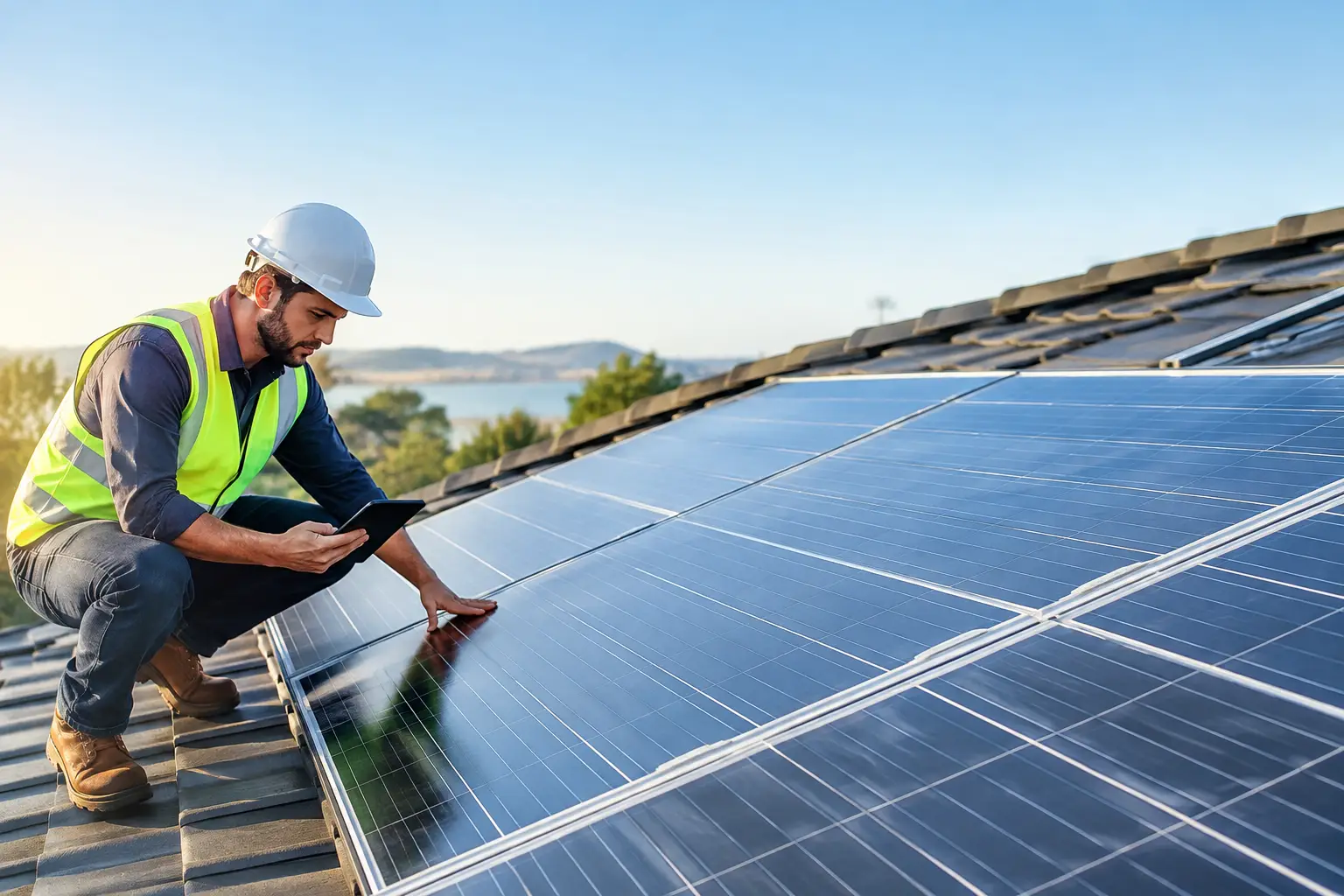
A roof can look perfectly sound from the driveway and still be a poor candidate for solar. Roof suitability for solar panels comes down to more than having open space above your home. Its age, condition, framing, sun exposure, layout, and local weather demands all affect the system design, installation cost, and long-term value of going solar.
For most homeowners, the question is not simply, "Can panels go on my roof?" It is whether installing them now is the practical choice or whether a roof repair, replacement, trimming project, or different system design should come first.
What Determines Roof Suitability for Solar Panels?
A qualified installer evaluates your roof as part of the complete solar project, not as a separate visual check. Modern mounting equipment works on many common residential roof types, including asphalt shingles, metal, tile, and some flat roofs. The details determine whether the installation is straightforward or needs additional planning.
The first consideration is usable roof area. Solar panels need space, but they also need clearances around ridges, edges, vents, chimneys, skylights, and fire-access pathways required by local code. A large roof with several dormers and plumbing vents may provide less usable area than a smaller, simple roof plane.
Panel efficiency also means a small roof is not automatically disqualified. If your electric usage is modest or the available roof plane has strong sun exposure, a smaller system may still make financial sense. Conversely, a large roof may not support the system size you expect if most of it faces unfavorable directions or is heavily shaded.
Roof age and condition come first
Installing solar on a roof near the end of its service life often creates avoidable expense. If the roof needs replacement after panels are installed, the panels and mounting equipment usually must be removed and reinstalled before roofing work can begin. That labor is commonly called a solar detach and reset, and it can add thousands of dollars to a future roofing project.
Asphalt shingle roofs often last roughly 20 to 30 years, though climate, ventilation, storm exposure, and material quality can shorten or extend that range. If your roof is already 15 to 20 years old, do not rely on age alone. Have a roofing professional assess the shingles, flashing, decking, and any signs of leaks or wear before finalizing a solar contract.
Look for curling or missing shingles, soft spots, repeated repairs, interior water stains, sagging, damaged flashing, or granules collecting in gutters. These do not always prevent solar installation, but they are reasons to address the roof first. A solar project should protect your home, not postpone necessary maintenance.
Structure matters, even when the roof looks fine
Solar equipment adds weight, but the weight itself is usually manageable for a properly built home. Standard rooftop panels, racking, and attachments often add about 2 to 4 pounds per square foot. The installer or structural professional must still confirm that the roof framing can support the system under local building requirements.
This review matters more in regions with substantial snow loads, high winds, hurricane exposure, or older framing. The total load is not just the panel weight. Engineers may account for snow accumulation, wind uplift, roof slope, truss or rafter spacing, attachment points, and the condition of the roof deck.
Most homes do not require major structural upgrades. But when an upgrade is needed, finding that out before permits and installation day is far better than facing a delay after equipment has been ordered. Ask whether the proposed design includes a structural review and whether reinforcement costs are included or treated as a possible change order.
Sun Exposure, Orientation, and Shade
Solar panels do not need a south-facing roof to work. In much of the United States, south-facing arrays can produce the most annual energy, but east- and west-facing roof planes are frequently excellent options. A west-facing system can be particularly useful where household energy use rises in the late afternoon and utility rates increase during peak hours.
The trade-off is production. Depending on location and roof pitch, an east- or west-facing array may generate somewhat less annual electricity than an ideal south-facing system. That difference may be acceptable when the roof layout is simple, the installation cost is lower, or the production profile better matches your utility's billing structure.
Shade deserves close attention because it can change throughout the year. Nearby trees, chimneys, dormers, utility poles, neighboring homes, and even future construction can reduce output. A site assessment should consider seasonal sun paths rather than judging shade based on one hour of daylight.
If partial shade cannot be avoided, system design becomes more important. Equipment such as microinverters or power optimizers can help limit the impact of shade on individual panels, but they do not create sunlight. Tree trimming may improve production, although homeowners should consider cost, property rules, and whether a tree provides valuable cooling shade during hot summers.
Roof pitch and material affect installation planning
Most pitched residential roofs work well for solar. A typical roof slope usually provides a practical angle for panel mounting, water drainage, and access. Steep roofs can require more labor and safety equipment, while very low-slope roofs may need specialized mounting approaches.
Roofing material affects the installation method. Asphalt shingles are common and generally straightforward. Standing-seam metal roofs can also be favorable because certain mounting systems clamp onto the seams without roof penetrations. Tile, slate, wood shake, and older or fragile materials may require specialized labor, replacement tiles, or a closer review of breakage risk.
Flat roofs offer flexibility because panels can be tilted toward a preferred direction. However, spacing between rows must prevent one row from shading another, and the design must account for wind loads and drainage. A flat roof is not automatically easier or cheaper than a pitched roof.
The Roof Layout Can Shape Your Solar Economics
The best solar design is rarely the one with the most panels that physically fit. It is the one that balances expected production, equipment cost, utility rules, roof constraints, and your household's electricity needs.
For example, a homeowner may want to offset nearly all annual electricity use, but only have space for a system that offsets 70 percent. That can still be a worthwhile project. In another case, a roof may have room for more panels than the household needs, but local net-metering rules may limit the value of significant excess generation.
Obstructions also affect costs. More roof planes, vents, and complex angles can mean more design time, more mounting components, and less efficient use of available space. A clean, unobstructed roof plane is often easier to build on, but a complex roof can still support a well-designed system.
Consider future electrical use as well. If you expect to buy an electric vehicle, install a heat pump, add a pool, or expand your home, your electricity demand may increase. Planning for that change can influence the recommended system size and how much open roof area you preserve for future panels.
Questions to Ask Before You Move Forward
A professional solar assessment should give you clear answers, not just a panel count. Ask how old your roof appears to be, whether repairs or replacement are recommended before installation, and how the proposed attachments will protect against leaks. You should also understand which roof planes will be used and why.
Ask for a production estimate that identifies the assumed shading and orientation. If the design includes panels on multiple sides of the roof, request an explanation of how each section contributes to annual output. Review whether the estimate reflects your actual electricity use and local utility rate structure rather than a generic consumption assumption.
It is also reasonable to ask who handles permits, structural requirements, inspections, and coordination with your utility. Solar installation is a home improvement project with electrical and roofing implications. Clear responsibility reduces surprises.
Finally, review workmanship and roof-penetration warranties separately from panel and inverter warranties. Product coverage and installation coverage are not the same thing. Know what is covered, for how long, and whom to contact if an issue appears after installation.
When a Roof Is Not the Right Solar Location
Some roofs are genuinely poor candidates. Severe, persistent shade; failing roofing materials; inadequate structural capacity that is expensive to correct; and very limited usable area can make rooftop solar less attractive. That does not necessarily end the conversation.
A ground-mounted system may work for a property with sufficient sunny land, subject to local zoning and site conditions. A carport or patio-cover structure may be another option in select situations. For homeowners whose site cannot support solar economically, energy-efficiency improvements such as air sealing, insulation, smart thermostat controls, and efficient HVAC equipment can still reduce utility costs.
The right answer is not always a rooftop array. The value of an assessment is knowing which path fits your home before you commit to equipment or financing.
A solar-ready roof is not required to be perfect. It needs to be sound, appropriately sized, and evaluated with the same care you would give any long-term home investment. Start with an honest roof assessment, then use the findings to build a solar plan that will still make sense years after installation.