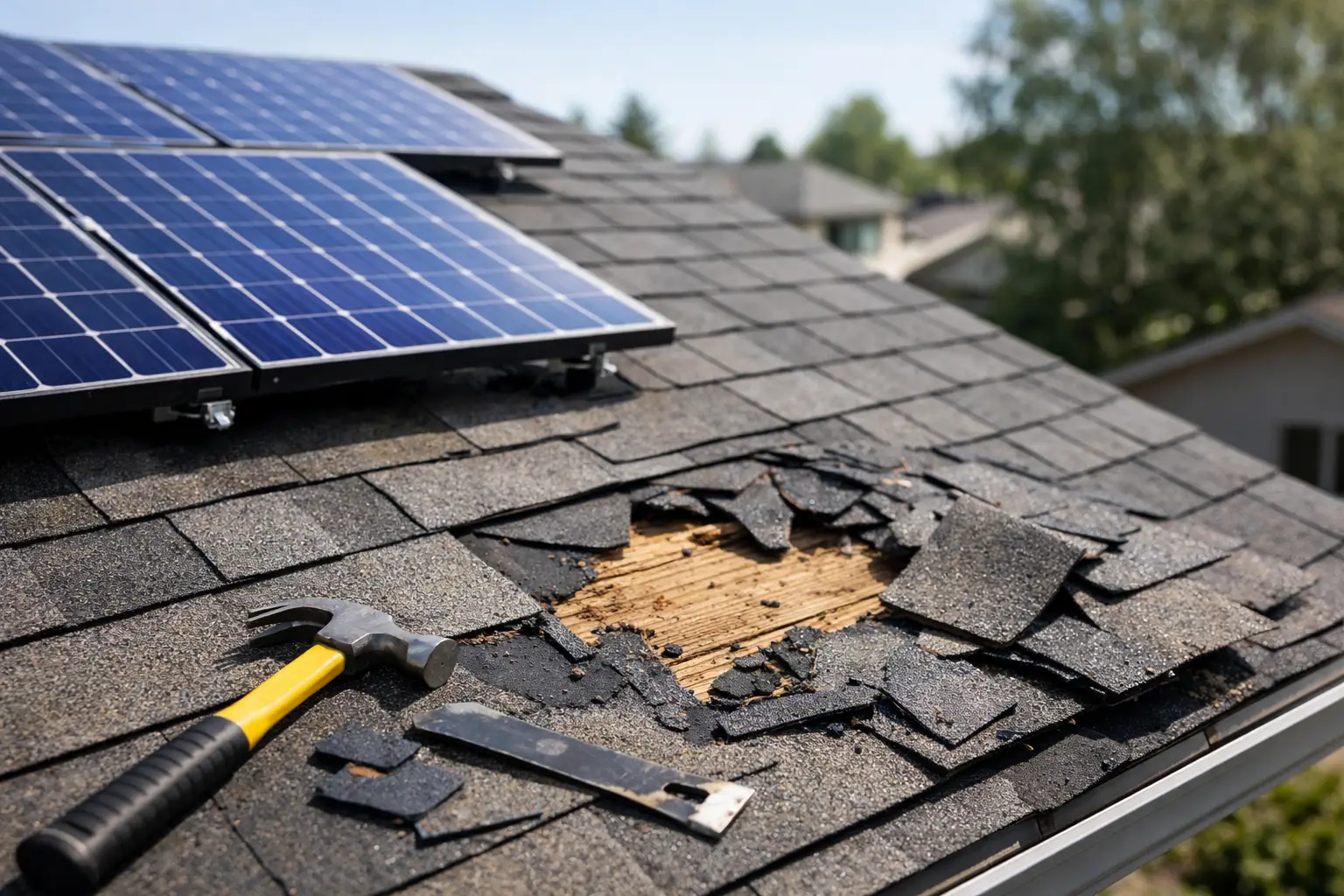
A solar system may operate for 25 years or longer. If your roof has only a few years of useful life left, the decision is not simply whether solar makes financial sense - it is whether the roof is ready for it. So, can solar panels damage roofs? Properly designed and installed systems should not. Poor installation, overlooked roof conditions, and shortcuts around waterproofing can create expensive problems.
The distinction matters. Solar panels do not sit directly on shingles or cause a sound roof to fail on their own. They are mounted on racking attached to the roof structure, with flashing and sealants used to keep penetrations watertight. A qualified installer treats the roof as a critical part of the project, not just a place to put equipment.
Can Solar Panels Damage Roofs When Installed Correctly?
A correctly installed residential solar array is designed to protect both the electrical system and the roof beneath it. Mounting points are secured into roof rafters or other approved structural members, not just the roof decking. Each penetration should be sealed with purpose-built flashing that directs rainwater away from the opening.
The panels can even provide limited shade to the roofing area underneath, reducing direct sun exposure in that section. That does not make solar a roof-preservation strategy, but it does reinforce the central point: solar equipment is not inherently harmful to roofing.
Problems generally arise when one of three things happens. The roof was already near the end of its life, the installer used poor mounting or waterproofing practices, or the system was designed without accounting for the roof's structure and materials. Those risks are manageable, but homeowners should address them before signing an installation contract.
Where Roof Problems Usually Start
Improperly sealed mounting penetrations
Most rooftop solar systems require penetrations where mounting hardware connects to the roof structure. Penetrations are normal. Unprotected or incorrectly flashed penetrations are not.
A leak can develop when an installer misses a rafter, uses an unsuitable fastener, damages shingles during installation, or relies on sealant alone where flashed hardware is required. Sealant is useful, but it should not be the only defense against water intrusion. Proper flashing is designed to shed water as it moves down the roof.
Leaks may not appear immediately. Water can travel along decking or framing before it becomes visible inside the home, which is why workmanship, documentation, and post-installation inspections matter.
An aging or deteriorated roof
Solar does not reverse roof aging. If shingles are brittle, curled, missing granules, or nearing the end of their expected service life, installing panels first can create a costly sequencing problem. When the roof needs replacement, the panels and racking usually must be removed and reinstalled.
This process, often called solar detach and reset, adds labor and coordination costs. It can also interrupt solar production while the work is underway. Replacing an aging roof before solar may increase the upfront project cost, but it is often the more economical decision over the life of the system.
Roof age alone does not decide the issue. A 12-year-old architectural shingle roof may have many good years left, while a younger roof with storm damage or poor prior workmanship may need attention now. A roof inspection gives a more reliable answer than a calendar does.
Poor structural assessment
Panels, racking, wiring, and attachments add weight to a roof. The added load is typically manageable for a structurally sound home, but local building codes require installers to evaluate factors such as roof framing, snow loads, wind exposure, and the planned system layout.
Wind is particularly relevant in hurricane-prone and coastal areas. A proper design considers uplift forces, attachment spacing, and the engineering requirements for the jurisdiction. A system that is under-engineered for local conditions can create risks to the roof and to the equipment itself.
Roof materials that need a different approach
Asphalt shingles are the most common and generally the most straightforward roofing material for solar installation. Tile, metal, slate, wood shake, and flat roofs can also support solar, but the mounting method must match the material.
For example, tile roofs may require specialized hooks and careful tile handling. Standing-seam metal roofs can sometimes use clamps that avoid roof penetrations altogether. Fragile slate and older wood shake roofs may call for a specialist evaluation or a different solar placement. The right question is not whether a material can hold solar panels. It is whether the installer has a documented method for that specific roof.
What a Qualified Installer Should Check First
Before finalizing a design, the installer should evaluate the roof's condition, orientation, usable space, obstructions, and structural details. This assessment should happen before installation day, not after materials arrive.
Ask how the company identifies rafters, what flashing system it uses, and whether it conducts a roof and attic review when accessible. The answers should be specific. A professional should be able to explain how attachments are located, how water is managed around them, and what happens if the crew finds concealed roof damage during the project.
You should also ask who handles permits and structural engineering. Requirements vary by city, county, utility territory, and roof type. A reputable provider coordinates the necessary approvals rather than treating them as an afterthought.
Documentation deserves attention as well. Keep copies of the system design, permit records, roof photos, warranty information, and final inspection documents. If you sell the home, make an insurance claim, or need future roof work, those records make the process easier.
Warranties, Insurance, and Accountability
Solar warranties and roof warranties are separate, and homeowners should understand both before installation. A panel manufacturer's product warranty does not cover a roof leak. The installer's workmanship warranty may cover damage caused by its work, but the terms, duration, and claims process can vary widely.
Check your existing roof warranty, too. Some roofing manufacturers or contractors may have requirements related to third-party penetrations. A quality solar installer should be willing to coordinate with your roofer when the roof is newer or under an active warranty.
Homeowners insurance often covers solar equipment as part of the dwelling, but policies differ. Notify your insurer after installation and confirm whether your coverage limits, deductibles, or documentation requirements change. This is especially worthwhile in areas with hail, high winds, wildfires, or frequent severe storms.
How to Reduce Roof Risk Before Going Solar
Start with an honest roof assessment. If your roof has visible wear, recent leak history, soft spots, or less than roughly 10 years of expected life remaining, ask a licensed roofing professional for an opinion before moving ahead. The exact threshold depends on the roof type, climate, and the scope of the solar project, but the goal is to avoid installing a long-lived system over a short-lived roof.
Then compare solar proposals on more than price and panel count. Look for clear information about mounting hardware, flashing, workmanship coverage, permit handling, and the company's experience with your roof material. The lowest quote can become expensive if it omits proper engineering or leaves you managing a leak dispute later.
After installation, inspect the attic and ceilings periodically, especially after the first heavy rain. You are not looking for a reason to worry. You are simply catching a small issue early, when it is far easier to correct. Keep roof access clear for qualified technicians, and avoid allowing unrelated contractors to alter solar mounting equipment.
When a Ground-Mounted System May Be Better
Roof solar is practical for many homes, but it is not the only option. A ground-mounted system may make sense when the roof is heavily shaded, structurally unsuitable, too small for the desired system size, or due for major replacement. Ground mounts require available land, appropriate setbacks, trenching, and site conditions, so they are not automatically less expensive.
Still, they can simplify future roof maintenance and allow panel orientation to be optimized independently of the house. For some properties, that flexibility is worth considering during the design stage.
A good solar decision begins with the condition of the home you already have. If the roof is sound and the installation team uses the right engineering, attachments, and flashing, rooftop solar can be a dependable long-term improvement. If the roof needs work, address that first and let the solar project start on a foundation built to last.