A solar quote can look deceptively simple: panel count, system size, price. But the inverter choice behind that quote can affect how your system handles shade, how easily you can expand it, what you can see in an app, and how much you pay upfront. In the string vs microinverters decision, neither option is automatically better. The right fit depends on your roof and your goals.
An inverter has one essential job: it converts the direct-current electricity produced by solar panels into the alternating-current electricity your home and utility use. The difference is where that conversion happens and how each panel is managed along the way.
How String Inverters Work
With a string inverter, multiple solar panels are wired together in a series called a string. The combined DC power travels to one centralized inverter, usually installed near your electrical panel, garage, or exterior service equipment. The inverter then converts that power to usable AC electricity.
This design has been common in residential solar for years because it is straightforward, proven, and generally less expensive than panel-level electronics. A well-designed string inverter system can be an excellent choice for a simple roof with large, open areas that receive similar sunlight throughout the day.
The key limitation is the string itself. Panels connected in series tend to operate around the level of the weakest-performing panel. If one panel is significantly shaded by a chimney, vent pipe, tree branch, or snow accumulation, output from the rest of that string may be reduced. Modern string systems can lessen this issue with smart design and multiple maximum power point tracking inputs, but they cannot always eliminate it.
String inverters are also a central point of failure. If the inverter needs replacement, the entire system may stop producing until service is completed. The trade-off is access: because the inverter is typically mounted at ground level, inspection and replacement are usually simpler than servicing equipment on the roof.
How Microinverters Work
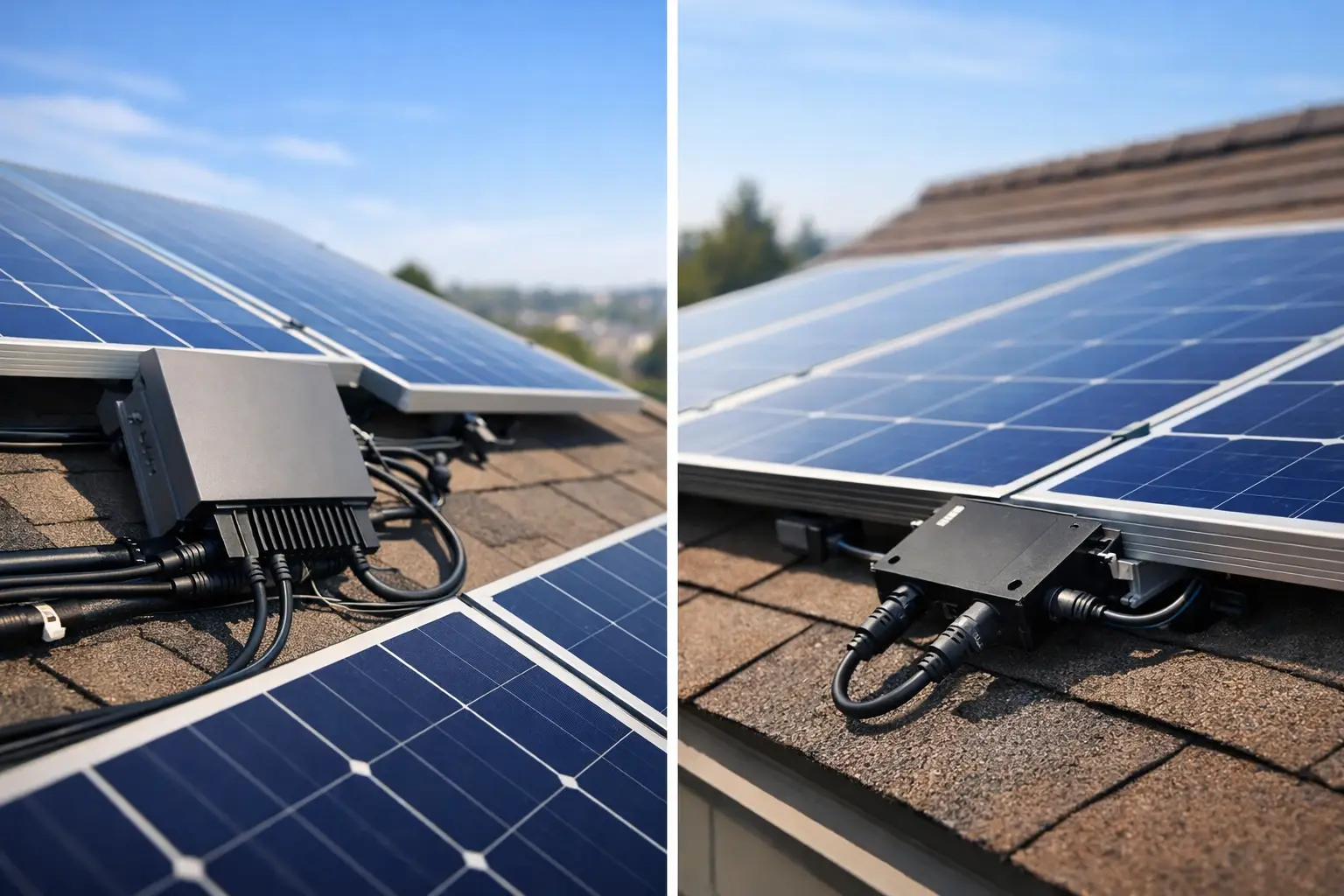
Microinverters are small inverters installed beneath each solar panel. Rather than sending combined DC electricity from a row of panels to one central device, each panel converts its own output to AC on the roof. Those AC outputs are then combined and sent to the home's electrical system.
Because every panel operates independently, one underperforming panel has less effect on the others. That makes microinverters particularly useful on roofs with intermittent shade, several roof planes, different panel orientations, or angles that cause panels to receive sunlight at different times.
Microinverter systems also provide panel-level production data. A homeowner can typically see whether one specific panel is producing less than expected instead of only viewing the system's total output. That visibility can make troubleshooting more precise, though it should not be mistaken for a guarantee that every small output difference requires service. Weather, soiling, seasonal sun angles, and normal system variation all affect production.
The drawback is cost. Microinverters add equipment and labor at every panel, so they commonly carry a higher upfront price than a comparable string inverter design. They also place more electronic components on the roof. Quality products are built for that environment and often carry long warranties, but a failed microinverter generally requires a technician to access the roof and remove the associated panel.
String vs Microinverters: The Factors That Matter
The best way to compare these options is not to start with a brand preference. Start with the roof. A system that looks similar on paper may need very different equipment depending on where it is installed.
Shade and roof complexity
Microinverters often earn their higher price on complicated roofs. If panels must be split between east- and west-facing planes, placed around dormers, or installed near trees that cast moving shadows, independent panel operation can preserve more of the system's potential production.
For a broad south-facing roof with little to no shade, a string inverter may produce nearly the same annual energy for less money. Paying for panel-level electronics in that situation may still be reasonable if monitoring or future expansion matters to you, but the production advantage may be modest.
Do not rely solely on a satellite image or a salesperson's general statement that a roof is “sunny.” Ask for a shade analysis and an explanation of how the installer modeled production. Trees grow, nearby construction changes, and a small afternoon shadow can matter if it affects a large portion of a string.
Upfront cost and long-term value
A lower system price is meaningful, but it is not the only cost to consider. Compare projected annual production, equipment warranties, expected service needs, and the value of features that matter to your household. If a microinverter design costs more but meaningfully improves output on a shaded roof, the premium may be justified. If both designs have nearly identical production estimates, the lower-cost string option may offer stronger financial value.
Request proposals that show system size in kilowatts, estimated first-year production in kilowatt-hours, total installed price, and assumptions used for the estimate. Comparing only the number of panels or the advertised price can hide important differences.
Also ask what happens if an inverter fails after the labor warranty ends. Product warranty coverage and labor coverage are not always the same. A replacement part may be covered while the trip, roof work, or labor is not.
Monitoring and troubleshooting
Microinverters are attractive to homeowners who want detailed information. Panel-level monitoring can identify a failed panel, a disconnected component, or unusual shading more quickly than whole-system monitoring alone.
String inverter monitoring is often sufficient for homeowners who primarily want to confirm that the system is producing as expected. Some string systems can be paired with power optimizers, which are panel-level devices that can improve performance under mismatch or shade and provide more detailed monitoring. That creates a third option worth discussing with an installer: a central inverter with optimizers.
More data is useful only if someone is watching it and knows what warrants action. Your installer should explain who monitors the system after installation, how production alerts work, and how service requests are handled.
Future expansion
If you expect to add panels later, discuss that before signing a contract. Microinverter systems can be easier to expand because additional panels can operate independently, subject to electrical design rules and utility approval. A string inverter may have limited capacity for future panels, and an expansion could require a larger inverter, another inverter, or a different wiring approach.
Expansion is not always simple with either technology. Your utility interconnection approval, main electrical panel capacity, roof space, panel model availability, and local code requirements can all limit what is practical. Planning ahead is usually less expensive than redesigning later.
Battery plans and electrical design
Home battery compatibility is another reason to evaluate the full system rather than the inverter in isolation. Some batteries are designed to work especially well with AC-coupled solar systems, while others may be more efficient or cost-effective in a DC-coupled configuration. There is no universal answer because battery goals differ.
If your priority is backup power during outages, ask the installer exactly what will remain powered. Solar panels alone do not automatically run your house when the grid is down. The design may need a battery, backup gateway, critical-load panel, or other equipment. The inverter type is only one part of that plan.
Questions to Ask Before Choosing
A qualified installer should be able to explain the recommendation in plain language. Ask why the proposed inverter type fits your roof, how shade was accounted for, and whether another design would change the annual production estimate. Ask for the warranty terms for panels, inverters, workmanship, and roof penetrations separately.
It is also reasonable to ask for a side-by-side proposal. A comparison between string inverters and microinverters on the same panel layout can reveal whether the price difference is tied to real production gains or simply to equipment preference. Make sure both quotes use comparable assumptions about incentives, utility rates, financing, and degradation.
Do not treat inverter selection as a stand-alone purchase. Panel placement, electrical equipment, local permitting, utility rules, service responsiveness, and installer workmanship all influence the outcome. The best equipment can still underperform if the design is rushed or the installation support is weak.
A productive next step is to have a solar professional review your actual roof, shade pattern, electrical setup, and energy use before you compare proposals. The right inverter is the one that supports a well-designed system for your home, not the one with the most impressive specification sheet.