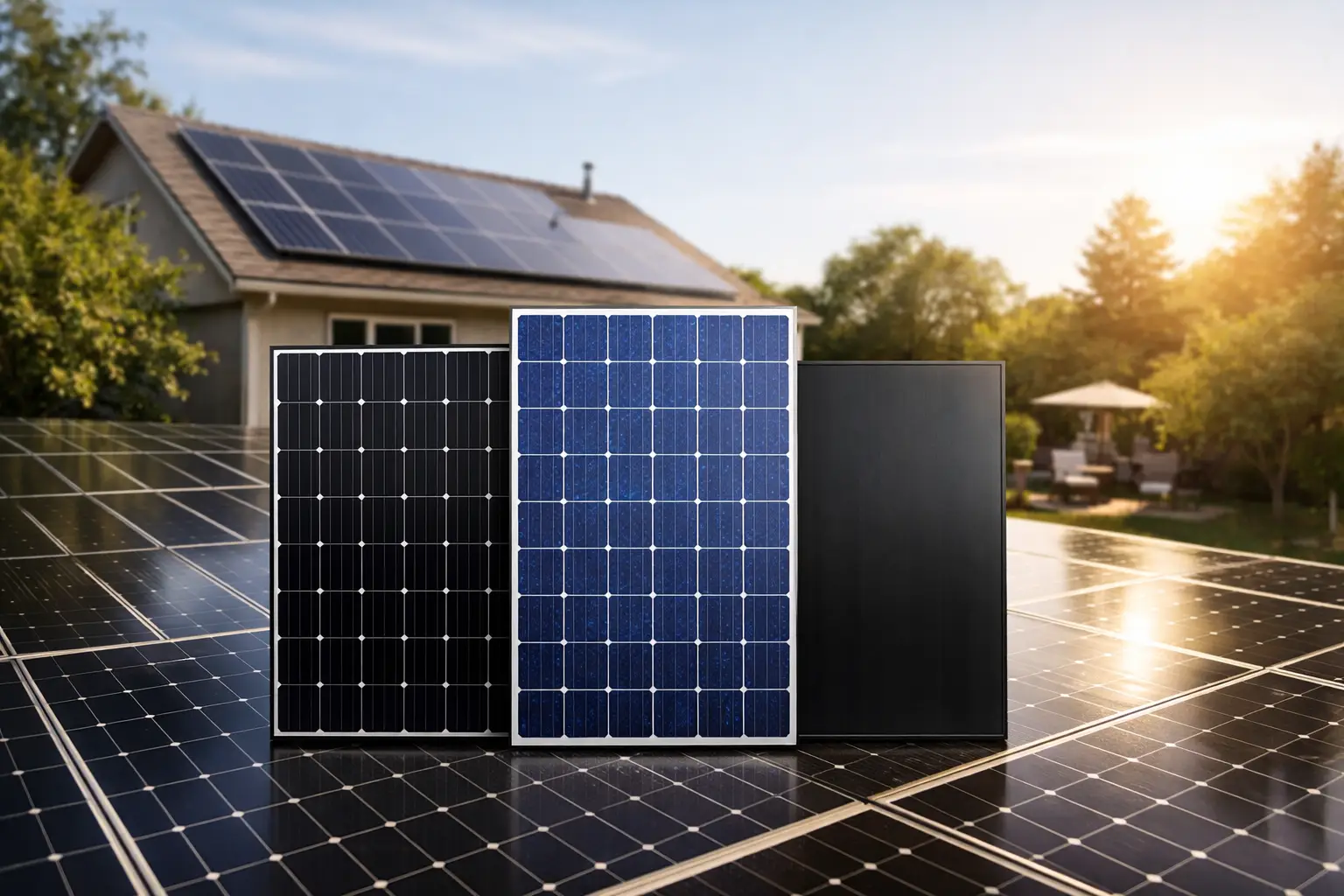
The right solar panel is not always the one with the highest efficiency rating or the most recognizable name. When homeowners ask which solar panel is best for home use, the practical answer is the panel that produces enough electricity for their roof, holds up in local conditions, and delivers a sound return at a price that fits the project.
A solar system is a long-term home improvement. Panels may operate for 25 years or more, but the best purchase depends on your roof layout, annual electricity use, utility rules, budget, and installer quality. Comparing panels the right way helps you avoid paying extra for specifications that will not materially improve your savings.
Which Solar Panel Is Best for Home Use?
For many US homeowners, a high-quality monocrystalline panel from an established manufacturer is the strongest all-around choice. Monocrystalline panels are efficient, widely available, and well suited to the limited roof space common on suburban homes. They typically offer a good balance of output, appearance, warranty coverage, and cost.
That said, “best” changes with the home. A premium, high-efficiency panel can make sense on a small or shaded roof where every square foot matters. A mid-priced panel with solid performance may be the better investment on a large, unobstructed roof, where there is room to install additional capacity without buying the most expensive modules.
Rather than starting with a brand name, start with the system goal. Are you trying to offset most of a high electric bill? Do you have a compact roof with multiple vents and dormers? Are you planning to add an electric vehicle, heat pump, or battery later? Those answers determine whether you should prioritize efficiency, total system size, or upfront cost.
Start With Panel Type
Most residential solar proposals use one of three panel categories: monocrystalline, polycrystalline, or thin-film. For a typical home installation, monocrystalline is generally the preferred option.
Monocrystalline panels use cells made from a single silicon crystal structure. They usually provide higher efficiency than polycrystalline panels, meaning they generate more power from the same roof area. Their dark appearance is also preferred by many homeowners. They cost more than lower-efficiency options, but that premium is often justified when roof space is constrained.
Polycrystalline panels have historically offered a lower-cost alternative, although they are less common in new premium residential systems than they once were. Their efficiency is generally lower, so they need more roof area to produce the same amount of power. They can still be a reasonable choice when space is plentiful and a homeowner receives a meaningful price advantage.
Thin-film panels are lightweight and can perform well in certain commercial or specialized applications, but they are rarely the leading choice for a standard rooftop home system. They tend to require substantially more space for equivalent output.
Efficiency Matters, but Roof Fit Matters More
Panel efficiency measures how much sunlight a panel converts into electricity. Residential panels commonly fall in the high teens to low twenties in efficiency, with premium models reaching higher. Higher efficiency is useful, but it is not a direct measure of whether one system will save more money than another.
Consider two proposals designed to produce similar annual electricity. One may use fewer high-efficiency panels, while the other uses more moderately efficient panels. If both fit the roof, use reliable equipment, and carry comparable warranties, the lower-cost option could provide better value.
High-efficiency panels are most valuable when your usable roof area is limited. This is common on homes with complex roof lines, skylights, chimneys, vents, or sections affected by shade. They also help homeowners who want the most production possible without using every visible roof surface.
A careful layout should account for orientation and tilt as well. South-facing roofs often receive the most annual sun in the Northern Hemisphere, but east- and west-facing arrays can still perform very well. In some utility rate structures, west-facing production may be especially useful because it generates more power later in the afternoon, when household use and electricity prices can rise.
Compare Output, Not Just Wattage
Panel wattage tells you the power a panel can produce under standard test conditions. Residential modules are commonly rated in the 400-watt range, though available ratings vary. A 430-watt panel is not automatically better than a 400-watt panel, because dimensions, efficiency, temperature behavior, and system design also affect real-world production.
Ask each installer for an annual production estimate in kilowatt-hours, not only the number of panels or the system's DC size. Then compare that estimate against your past electricity consumption. A well-designed proposal should explain the expected offset, assumptions about shading, and how future energy needs could affect the design.
Also ask whether the estimate reflects your local weather and roof conditions. Production software is useful, but it should not replace a site assessment. A small shade issue from a tree, chimney, or neighboring structure can have a meaningful effect over time.
Look Closely at Warranties and Degradation
A solar panel warranty has two main parts: the product warranty and the performance warranty. The product warranty covers defects in materials and workmanship. The performance warranty addresses how much output the manufacturer expects the panel to retain over time.
Many quality residential panels now include product warranties of 25 years, though terms vary by manufacturer and model. Performance warranties often promise that panels will retain a specified percentage of their original output after 25 to 30 years. Lower annual degradation is generally favorable because it means more production later in the system's life.
Do not compare warranty length alone. Read what is covered, who handles a claim, and whether the installer will support the process if a panel has an issue. A long manufacturer warranty has less practical value if the installation company is difficult to reach or the labor to remove and replace equipment is excluded.
Consider Heat Performance and Local Conditions
Solar panels produce less power as their temperature rises. This is normal, especially on hot roofs during summer. A panel's temperature coefficient indicates how much output may decline as operating temperatures increase. A less negative temperature coefficient is generally better, particularly in hot climates such as Arizona, Texas, Florida, and inland California.
Local weather should shape other choices as well. In areas with heavy snow, wind, hail, or salt air, the mounting system, roof attachment method, and panel certifications deserve as much attention as the panel itself. The panel is only one part of a system that must perform safely on your home for decades.
Do Not Ignore Inverters and Installation Quality
A strong panel paired with weak system design will not produce the result you expect. Inverters convert the panels' direct-current electricity into the alternating current used by your home. They also influence how the system handles shade, panel-level monitoring, and future expansion.
Microinverters or power optimizers can be helpful on roofs with partial shade or multiple roof orientations because they allow panel-level performance management. A string inverter may be a cost-effective choice on a simple, unshaded roof. Neither approach is universally best. The right design depends on the site and the homeowner's priorities.
Installation quality is equally important. An experienced installer should evaluate roof condition, electrical capacity, fire setbacks, local permit requirements, and utility interconnection rules before finalizing the design. If your roof will need replacement within the next several years, handling that work before solar installation can prevent unnecessary removal and reinstallation costs.
A Practical Way to Choose Between Proposals
When comparing proposals, keep the evaluation focused on the complete system rather than panel marketing. Review the panel model, system size, estimated annual production, inverter type, workmanship warranty, total price, financing terms, and assumptions about utility bill savings.
Be cautious with a proposal that promises a fixed electric bill or treats a tax credit as guaranteed savings without explaining eligibility. Federal incentives, state programs, net-metering policies, and utility rates can affect the financial outcome. A qualified tax professional can help determine whether you can use available tax credits.
The best proposal should be clear enough that you can explain why it fits your home. You should know what equipment is being installed, how much electricity it is expected to generate, what the project costs, and who is responsible if something goes wrong.
For most homes, a reputable monocrystalline panel with strong warranties, an appropriate inverter design, and professional installation is a better choice than the most expensive panel on the market. Choose the system that matches your roof and energy plan, then make the purchase with documentation you can rely on for years.