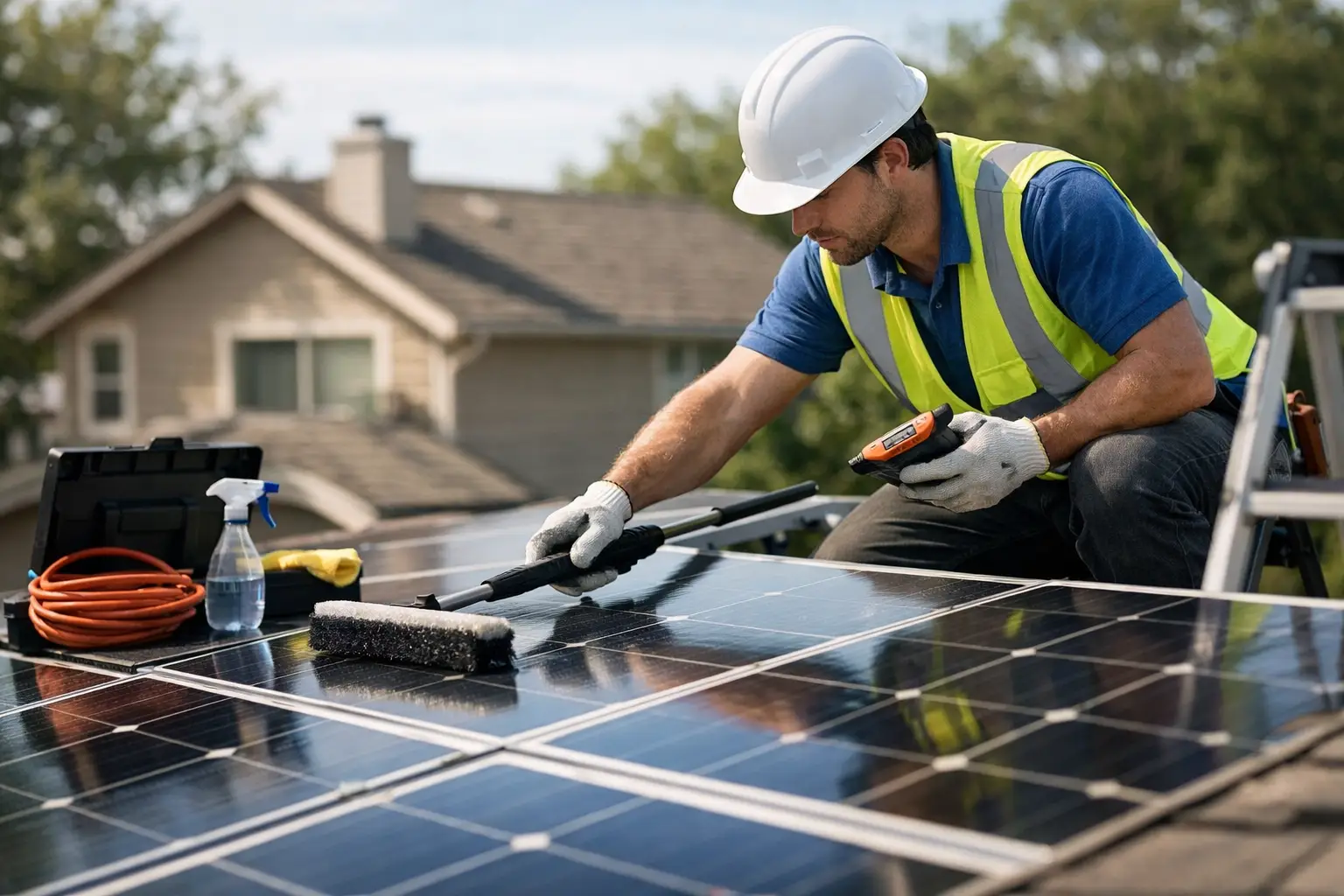
A solar system should quietly produce electricity for decades, but “quietly” does not mean “ignore it.” Effective solar panel maintenance for homeowners is less about frequent hands-on work and more about spotting changes early, protecting the equipment, and knowing when a professional should take over. Most systems need far less attention than a roof, HVAC unit, or pool, yet a small issue with wiring, roof flashing, or production can become more expensive when left unnoticed.
For most US homeowners, a simple monitoring routine and a few seasonal visual checks are enough. The goal is not to make your system look perfect. It is to make sure it is safe, producing as expected, and still protected by its manufacturer and installer warranties.
What Solar Panel Maintenance Actually Includes
Solar panels have no moving parts, which is one reason residential solar is relatively low-maintenance. The panels, mounting hardware, inverter, electrical connections, and monitoring equipment still operate outdoors through heat, cold, wind, rain, and debris. Each part has different maintenance needs.
Your regular responsibilities are usually limited to checking production data, looking for obvious physical concerns from the ground, and keeping avoidable shade or heavy buildup from affecting the array. Work involving electrical equipment, roof access, panel removal, damaged glass, or loose mounting hardware belongs with a qualified solar professional.
A useful rule is to separate routine observation from repair. Homeowners can observe safely. Technicians diagnose and repair safely.
Monitor Energy Production Every Month
Your system’s app or web portal is often the most valuable maintenance tool you have. Review it once a month, or set alerts if your monitoring platform supports them. Look at daily, weekly, and monthly production rather than reacting to one low-output day.
Output naturally changes with the seasons. A system in Arizona may produce strongly through much of the year, while a system in the Northeast may see large swings between July and January. Cloud cover, smoke, unusually hot weather, snow cover, and utility outages can also affect what you see. Comparing a January day to a June day does not tell you much.
Instead, compare current production with the same period last year when possible. A sustained, unexplained decline deserves attention, especially if it is significant and local weather has been normal. Your monitoring app may also flag an inverter fault or communication error. A communication issue does not always mean the panels have stopped producing, but it should be checked so you are not operating without visibility.
Keep your utility bills as part of the picture. Lower solar production may show up as higher grid use, but billing changes can also result from increased air conditioning, a new electric vehicle, changed utility rates, or time-of-use billing. Production data and consumption data answer different questions.
Inspect Your System From the Ground
A ground-level inspection twice a year is usually sufficient, with an additional check after a major hailstorm, windstorm, or falling-tree event. Do not climb onto the roof to inspect panels unless you are trained, equipped, and your roof access is designed for safe service.
From a safe vantage point, look for visible cracks, shattered glass, heavy dirt buildup, standing debris, or a new source of shade. Check whether branches have grown into the path of the sun. Also look at the roof area around the array for displaced shingles, loose-looking hardware, or signs that an object struck the system.
At ground level, inspect the inverter and any visible electrical equipment. Warning lights, error codes, unusual noises, water intrusion, scorch marks, or a repeatedly tripped breaker should prompt a service call. Do not open electrical enclosures or attempt to reset equipment repeatedly. Solar equipment can remain energized whenever sunlight reaches the panels, even when the utility grid is down.
Does Your Solar Array Need Cleaning?
The answer depends on where you live and what lands on your roof. In many parts of the country, ordinary rain and weather keep panels clean enough that professional cleaning provides little measurable benefit. A thin layer of dust or pollen may affect output slightly, but the cost and risk of routine roof cleaning can outweigh the gain.
Cleaning is more likely to be worthwhile when panels are affected by heavy dust, persistent wildfire ash, bird droppings, agricultural debris, nearby construction dust, or infrequent rainfall. Flat or low-tilt panels may also hold more dirt than steeply angled arrays.
Before scheduling cleaning, check your monitoring data. If production remains consistent with expected seasonal patterns, cleaning may be unnecessary. If you can see substantial buildup and output is lower than expected, request guidance from your installer or a solar service company.
If cleaning is appropriate, follow the panel manufacturer’s instructions. Avoid pressure washers, abrasive pads, harsh chemicals, and very hot water on hot panels. These can damage panel surfaces, seals, or coatings. Never spray water near damaged wiring or electrical equipment. For roof-mounted systems, hiring an insured professional is often the sensible choice because the fall risk is greater than the cleaning task itself.
Manage Shade Before It Becomes a Production Problem
Shade is one of the most common causes of reduced solar production. A small amount of morning or late-afternoon shade may have limited impact, particularly on systems designed with microinverters or power optimizers. A branch that shades panels during peak midday hours can have a more meaningful effect.
Trim trees carefully and legally, especially when branches are near utility lines or cross property boundaries. Do not assume that removing every branch is necessary. Trees provide cooling, privacy, and storm protection, and aggressive trimming can create a larger home-maintenance problem. The practical objective is to reduce material new shade, not to eliminate every shadow.
If a neighboring structure, new tree growth, or roof addition has changed your sun exposure, a solar professional can review the production impact. In some cases, a monitoring issue or inverter fault may be mistaken for shade, so it is worth confirming the cause before paying for major tree work.
Know When to Call a Solar Professional
Some situations are clear service calls. Contact your installer, equipment manufacturer, or a qualified solar technician if you notice cracked panels, exposed wiring, water leaks near the array, loose hardware, burn marks, recurring inverter errors, or a sharp unexplained production drop.
Roof leaks deserve prompt attention, but avoid assuming the solar panels caused them. Leaks can originate from aging roofing materials, vents, flashing, storm damage, or mounting penetrations. A coordinated assessment by a solar technician and roofer may be needed, particularly if the roof is nearing replacement age.
You should also call a professional before any roof replacement, major roof repair, chimney work, or exterior construction near the array. Panels often need to be removed and reinstalled so the roofing work can be completed correctly. This is not a project for a general handyman without solar experience. Improper removal can damage modules, wiring, roof penetrations, or warranty coverage.
Protect Warranties and Service Records
Solar systems typically include separate warranties for panels, inverters, mounting components, workmanship, and sometimes roof penetrations. The terms vary widely. Some warranties cover equipment defects but not labor, while workmanship coverage may be limited to a shorter period.
Store your signed contract, permit documents, final inspection records, equipment serial numbers, monitoring login details, and warranty paperwork in one accessible location. If you sell the home, these records can help the buyer understand the system and may support a warranty transfer.
Before authorizing repairs, confirm who installed the system, which components are affected, and whether your service agreement requires approved technicians. Unauthorized modifications can complicate a claim. Take dated photos of visible issues from the ground and save screenshots of production alerts. Clear documentation makes troubleshooting more efficient.
A Practical Seasonal Routine
A homeowner does not need a complicated solar checklist. In spring, review winter production, look for pollen or storm debris, and assess new tree growth. In summer, watch for heat-related inverter notices and compare production with prior summer months. In fall, clear leaves from gutters and keep branches from overhanging the roof. In winter, monitor for snow cover and avoid dangerous attempts to clear panels.
Snow usually slides off tilted panels as conditions warm. Trying to rake or scrape a roof-mounted array can damage the glass, wiring, or mounting system, and it creates a serious fall hazard. Lost production during a short snow event is usually less costly than a damaged panel or an injury.
Solar Panel Maintenance for Homeowners Is Mostly About Attention
The best maintenance plan is simple: monitor production, inspect safely from the ground, address shade and heavy debris when justified, and bring in a qualified professional for anything involving the roof or electrical system. That approach protects your investment without turning solar ownership into another demanding household chore.
If your system’s output no longer matches its normal seasonal pattern, treat that as useful information rather than a reason to guess. A timely professional evaluation can protect production, preserve warranties, and keep your home-energy investment working as intended.