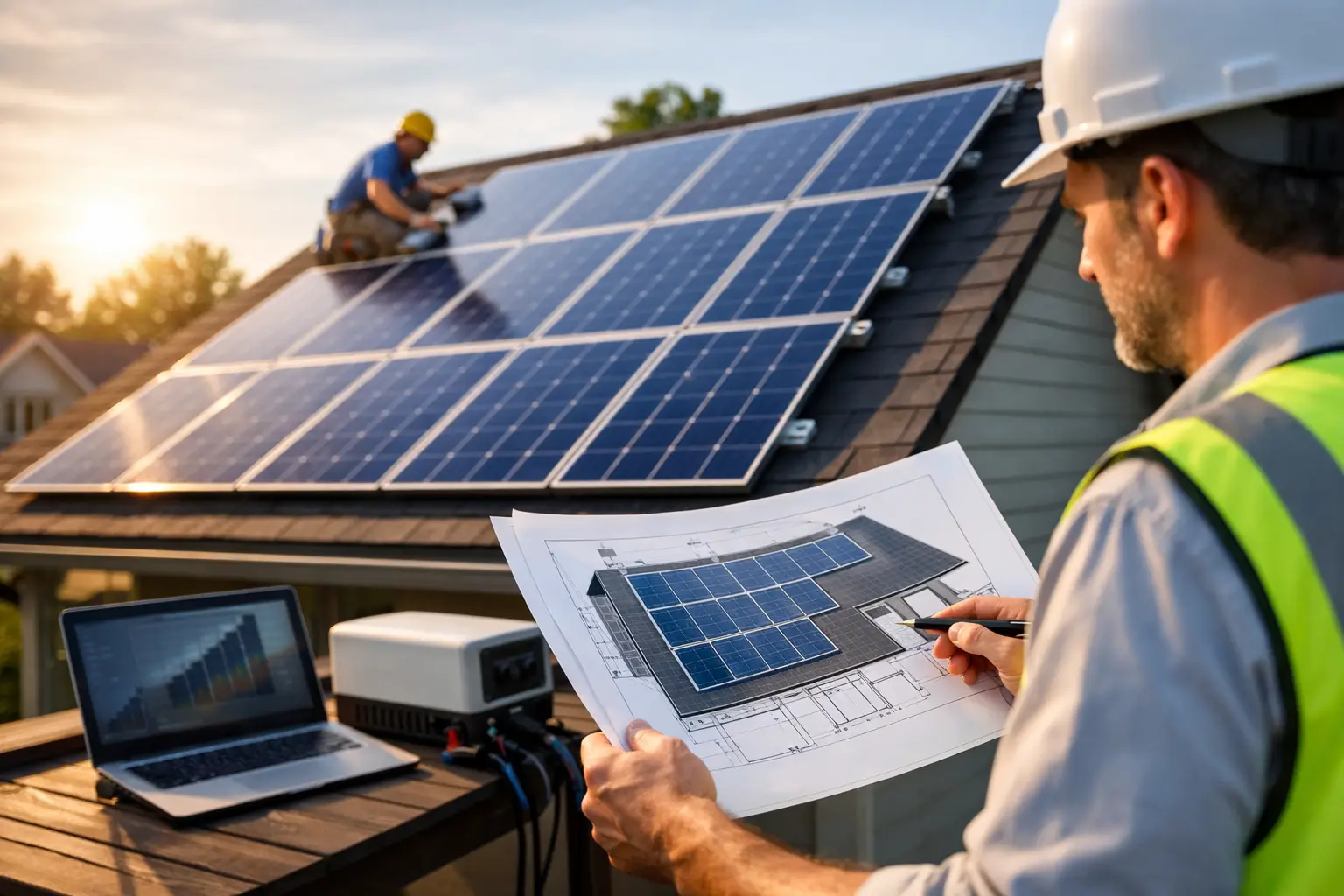
A solar proposal can look simple: a panel count, a system size, and a projected savings figure. But the value of a residential solar panel system design is decided well before installation day. A design has to fit your roof, match the way your household uses electricity, comply with local requirements, and produce savings that make sense under your utility’s rules.
For homeowners, the goal is not necessarily to cover every inch of roof space or buy the largest system available. It is to build a system that performs predictably, is priced fairly, and supports your energy goals without paying for capacity you cannot use.
Start With Your Electricity Use
Your electric bill is the foundation of system sizing. A qualified designer should review at least 12 months of usage, measured in kilowatt-hours (kWh), rather than relying on one recent bill. A single month can be distorted by unusually hot weather, holiday guests, a temporary work-from-home schedule, or seasonal heating.
Annual usage reveals both total demand and seasonal patterns. A home in Arizona may use far more electricity during summer air-conditioning months. In the Northeast, electric heating or heat pumps can raise winter demand. Those patterns affect how much solar generation is useful and when a battery could add value.
Future changes matter just as much as past use. If you plan to add an electric vehicle, replace a gas furnace with a heat pump, install a pool, or expand the home, disclose that early. Designing only around current consumption may leave you with a system that is undersized within a few years. On the other hand, building for several uncertain future upgrades can increase the upfront price without a clear return.
A practical approach is to separate likely changes from possibilities. An EV arriving next year is a real design input. A vague idea of adding a pool someday is usually not.
Residential Solar Panel System Design Begins on the Roof
Not every square foot of a roof has the same solar potential. Orientation, tilt, usable area, shading, and roof condition all influence production.
In much of the United States, south-facing panels generate strongly over the course of a year. East- and west-facing arrays can also be excellent choices, especially for homes that use more power in the morning or late afternoon. A west-facing design may produce less annual energy than an ideal south-facing layout, but it can align better with expensive late-day utility rates. That is a meaningful trade-off, not automatically a design flaw.
Shade deserves careful attention. Trees, chimneys, vent pipes, neighboring structures, and dormers can all reduce output. Seasonal shade is also easy to miss. A roof that appears clear in winter may be shaded by full tree canopies in summer, when solar production should be strongest.
Designers use site measurements and production modeling to estimate this impact. Homeowners should ask how shade was accounted for and whether tree trimming is assumed in the estimate. If trimming is necessary for projected production, make sure it is practical, permitted where you live, and included in your decision process.
Roof age is another major consideration. Removing panels later to replace shingles adds cost and coordination. If your roof is nearing the end of its useful life, reroofing before solar installation is often the cleaner financial decision. A new roof is not required for every project, but it should be evaluated honestly rather than treated as an afterthought.
Choose Equipment for the Roof You Have
Panel efficiency, inverter architecture, and electrical equipment should be selected for the property, not just marketed as premium upgrades.
Higher-efficiency panels can produce more power in a limited area. They are often useful when a homeowner has a small usable roof or wants to offset substantial electricity use. If roof space is plentiful, standard panels may deliver similar project economics at a lower cost. The right question is not, “Which panel is best?” It is, “Which equipment creates the best result for this roof and budget?”
The inverter converts the panels’ direct current into the alternating current your home uses. Two common approaches are string inverters and microinverters. A string inverter generally serves multiple panels from a central unit. It can be a cost-effective option for a simple, largely unshaded roof with panels facing the same direction.
Microinverters are installed at individual panels. They can be useful when roof sections face different directions or when intermittent shade affects only part of the array. They also allow panel-level monitoring. That flexibility can justify the added cost on a complex roof, but it is not always necessary on a straightforward layout.
Electrical capacity matters too. Older homes may need a main-panel upgrade, a line-side connection, or other electrical work before solar can be interconnected safely. This is not merely an installation detail. It can affect project cost, timing, and the future ability to add a battery, EV charger, or electrified appliances.
Design Around Utility Rules, Not Just Production
A solar system produces electricity, but your utility determines much of its financial value. Net metering, net billing, time-of-use rates, interconnection limits, and export compensation vary by state and utility territory.
Under favorable net-metering policies, excess daytime production may receive a credit close to the retail electricity rate. In other areas, exported power is credited at a much lower rate. When export compensation is low, maximizing annual solar production does not necessarily maximize savings. The design may need to focus more closely on self-consumption - using solar power in the home while it is being generated.
That can influence array orientation, system size, and battery planning. For example, a homeowner on time-of-use rates may benefit from an array that produces more energy later in the day, even if its total annual output is slightly lower. A battery can store some daytime solar energy for evening use, but its economics depend heavily on rates, usage habits, and backup priorities.
Ask an installer to show the assumptions behind the savings estimate. You should be able to see the projected annual production, expected utility-rate treatment, estimated degradation over time, and any assumed changes in electricity prices. A precise-looking savings number is only as useful as the assumptions beneath it.
Decide Whether a Battery Solves a Real Need
A solar battery is valuable for some homes and unnecessary for others. Solar panels alone generally shut off during a grid outage as a safety measure. A properly designed battery system can keep selected circuits operating when the grid is down, depending on the equipment and backup configuration.
The critical design question is what you want to power. Backing up a refrigerator, internet equipment, lights, outlets, and a gas furnace blower requires far less battery capacity than running central air conditioning, an electric range, a well pump, and every circuit in the house.
A whole-home backup system may be appropriate for a household with frequent outages, medical equipment, or a strong need for continuity. It can also be expensive. Many homeowners are better served by a critical-load panel that covers essential circuits for a longer period. There is no universal answer, but there should be a clear answer before equipment is quoted.
Battery design also requires attention to starting loads. Motors in air conditioners, pumps, and refrigerators can demand a surge of power when they start. Capacity and power rating are different specifications, and both affect whether the backup system performs as expected.
Review the Proposal Like a Long-Term Home Project
Before signing, compare proposals on more than panel count and sales price. Two systems with the same stated size can have different production estimates, inverter types, roof layouts, warranties, electrical scopes, and financing terms.
Make sure the proposal identifies the panel and inverter models, system size in kilowatts, estimated first-year production, roof layout, and anticipated permitting or electrical work. It should also clarify who handles utility interconnection, inspections, monitoring setup, and warranty service.
If financing is involved, distinguish the equipment price from the financing cost. A low monthly payment can result from a long loan term, a dealer fee, or both. Compare total repayment, interest rate, term length, and any prepayment terms. Cash savings and financed savings should not be presented as if they are the same calculation.
Permitting and interconnection can take longer than the physical installation. Local jurisdiction requirements, utility review timelines, and panel-upgrade needs can all affect the schedule. A professional design accounts for this reality instead of promising a date that depends on approvals outside the installer’s control.
A well-designed solar system should feel specific to your home, not copied from a generic sales template. The best next step is to ask for a design that explains its choices in plain language - because the system you understand is the one you are best prepared to own for the next 25 years.