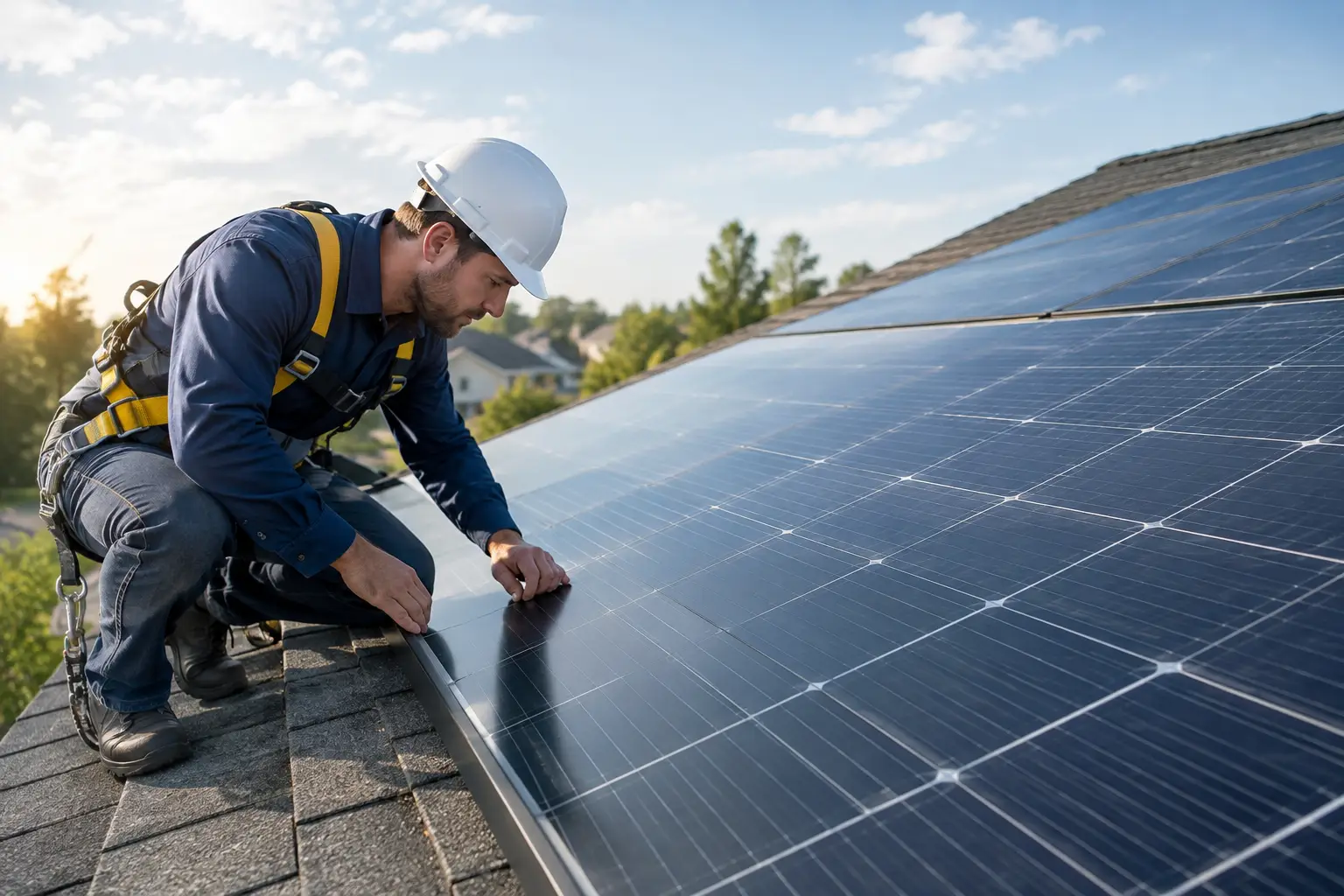
A ceiling stain that appears after a solar installation is enough to concern any homeowner. So, can solar panels cause leaks? The panels themselves do not cause roof leaks. But an improperly designed or installed mounting system can create a path for water to enter the roof assembly. The difference comes down to roof condition, flashing details, and installer workmanship.
A properly installed solar system should protect every roof penetration with code-compliant flashing and seal it into the roofing system. When that work is done correctly, solar can operate on a roof for decades without causing a leak. When it is rushed or handled by an inexperienced crew, the consequences can be expensive.
Can Solar Panels Cause Leaks? The Real Risk
Solar panels sit above the roof on racking. The racking is attached to the home through mounting points, usually fastened into roof rafters. Those mounting points are the area that requires precision.
Installers must locate structural framing, use the right attachment hardware, and integrate flashing under the surrounding shingles or other roofing material. The goal is not simply to seal a hole with caulk. It is to direct water around the mounting point, using the same water-shedding principles that protect vents, chimneys, and skylights.
A leak may occur if a fastener misses the rafter, flashing is installed incorrectly, roofing materials are damaged during the work, or sealant is relied on as the only line of defense. Water can also enter through an existing weak spot that becomes noticeable after foot traffic or weather exposes it.
That distinction matters when determining responsibility. A leak near a solar attachment point may be installation-related, while a leak farther away could stem from aging shingles, failed pipe flashing, a valley, or another roofing issue. A professional inspection should identify the source before anyone assigns blame or starts repairs.
Why Good Roof Preparation Matters
The best leak prevention starts before the first panel is installed. A qualified solar provider should inspect the roof's age, material, slope, drainage, visible wear, and structural condition. Solar is a long-term investment, and installing it over a roof that is close to replacement often creates unnecessary cost later.
If a typical asphalt shingle roof has only a few years of usable life left, replacing it first is often the practical choice. Removing and reinstalling solar panels for a reroof adds labor and scheduling complexity. It may still make sense to move ahead on an otherwise sound roof, but homeowners should make that decision with realistic roof-life estimates rather than a quick visual guess.
Roof material also affects the installation plan. Asphalt shingles are common and generally straightforward when proper flashing is used. Tile, slate, metal, flat roofing, and wood shake systems require specialized mounting approaches. The right attachment method is not interchangeable across roof types.
Local weather should shape the design as well. In regions with heavy rain, wind-driven storms, snow, or freeze-thaw cycles, flashing quality and drainage paths deserve extra attention. A solar layout should account for more than energy production. It must work with the roof's existing water management system.
The Installation Details That Prevent Leaks
A reputable installer treats waterproofing as a core part of the job, not a finishing step. The mounting system should be engineered for the roof and local code requirements, with attachments anchored into structural members rather than only roof decking.
At each penetration, flashing should extend beneath the upper course of shingles and over the lower course so water continues flowing downhill. This layered approach is more dependable than surface sealant alone. Sealant can support a properly flashed penetration, but it should not be the primary waterproofing strategy.
Installers should also avoid damaging shingles while lifting them, walking on them, or positioning equipment. Brittle shingles, especially on older roofs or in cold weather, can crack during installation. A careful crew recognizes when the roof material is too fragile for standard work and discusses alternatives before proceeding.
Electrical components matter, too. Conduit entries, junction boxes, and roof penetrations for wiring need the same level of flashing and sealing attention as racking attachments. A solar array can have excellent panel hardware and still develop a water problem if auxiliary penetrations are handled poorly.
Signs of a Potential Solar-Related Leak
Not every leak is immediately obvious. Water can travel along framing or under roofing layers before showing up inside, which means the visible stain may be several feet from the actual entry point. Homeowners should pay attention after the first significant rain following installation and after major storms.
Possible warning signs include new ceiling discoloration, damp attic insulation, dripping or moisture around roof framing, peeling paint near an exterior wall or ceiling, and shingle damage around mounts or conduit. A musty odor in the attic can also point to moisture that has been present longer than expected.
Do not assume that solar panels are the source simply because the timing is suspicious. Photograph the affected area, note when it appears and under what weather conditions, and contact the installer promptly. Clear documentation helps the installer diagnose the issue and supports a warranty claim if the work is related to the installation.
What to Do If You Find a Leak
First, protect the interior of the home. Move belongings away from the affected area, place a container under active drips, and reduce the risk of water reaching electrical fixtures. If water is pooling near electrical equipment or a ceiling is sagging, treat it as an urgent safety issue and contact a qualified professional.
Next, call the solar installer and ask for a site inspection. Do not remove panels, loosen mounts, or apply roof sealant yourself. A temporary patch in the wrong place can interfere with the inspection, worsen water flow, or complicate a warranty claim.
The installer should inspect the array attachments, flashing, conduit penetrations, and surrounding roofing. If the cause is not clear, an independent licensed roofer may be needed to evaluate the roof separately. This is particularly useful when the roof was older before solar was installed or when the leak is not close to the array.
Keep records of photos, written findings, repair estimates, invoices, and all communication. Review both the solar workmanship warranty and any roof warranty. Many solar companies cover installation-related leaks for a specified period, but coverage varies. Roof manufacturers and roofers may also have terms that affect repairs after another contractor has worked on the roof.
Questions to Ask Before Signing a Solar Contract
Homeowners can reduce leak risk by asking direct questions before choosing an installer. Ask who will inspect the roof, whether the installation crew is trained on your roof type, and what mounting and flashing system will be used. Request a clear explanation of how penetrations are waterproofed.
Also ask whether the company provides a roof-leak workmanship warranty, how long it lasts, and whether the process for reporting an issue is documented in the contract. Confirm who performs the work: the solar company, a subcontractor, or a separate roofing partner. Accountability should be clear before installation day.
Permitting and inspections offer another layer of protection, but they do not replace careful workmanship. Municipal inspection requirements differ by location, and an inspection may focus heavily on structural and electrical code compliance. Choose an installer whose internal quality-control process is strong enough to catch details before the final inspection.
A lower bid can look attractive, but a solar project is not just a panel purchase. It is a modification to one of your home's most important protective systems. Experience with your roof type, clear warranty terms, and responsive service are worth evaluating alongside price and projected energy savings.
Solar should not make a roof leak. With a sound roof, an appropriate mounting design, and a qualified installer, it can be a dependable improvement that produces power for years. The most useful next step is simple: make roof condition and waterproofing questions part of your solar evaluation from the start, not an afterthought once panels are already in place.