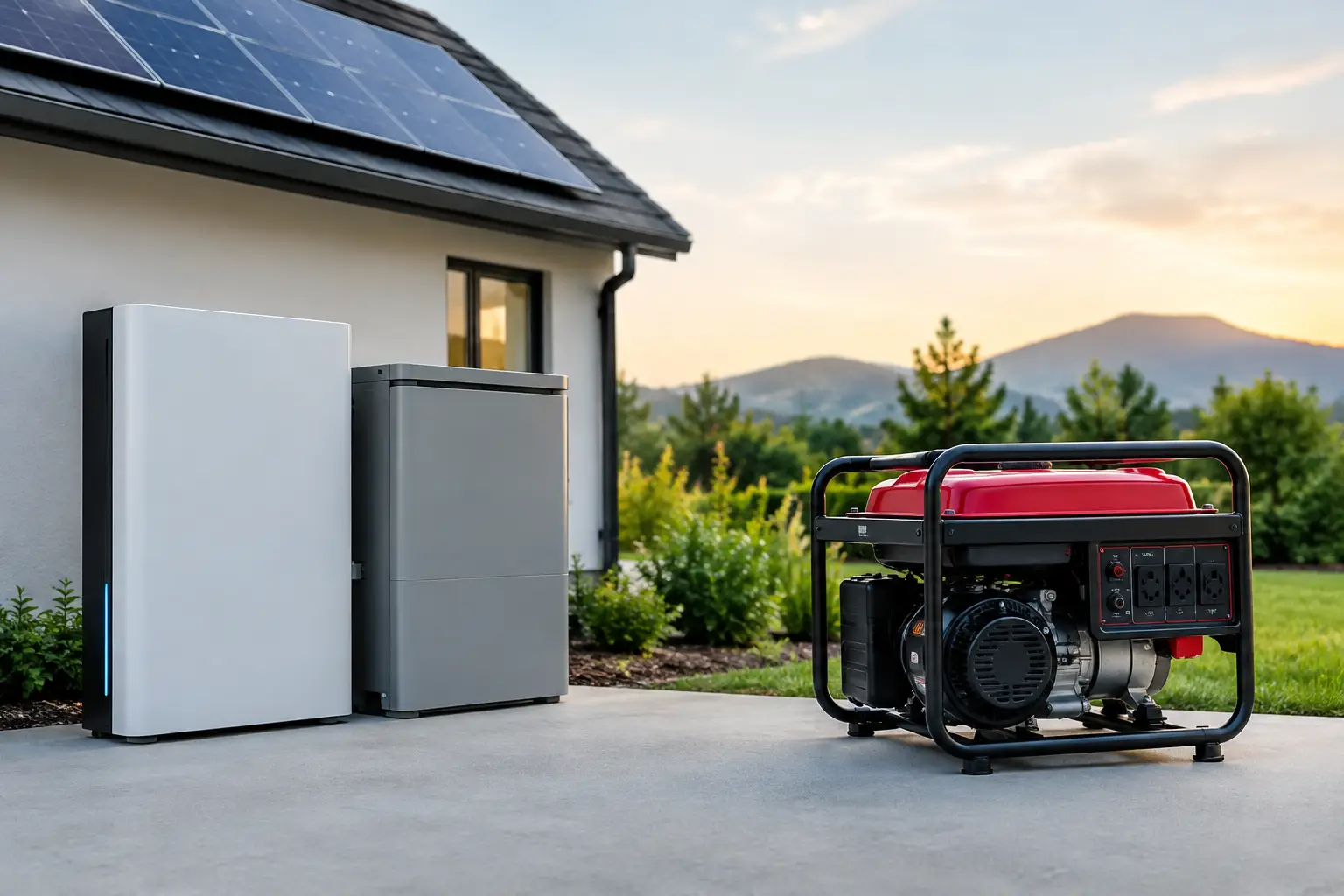
A power outage makes the differences between a solar battery versus generator very real, very quickly. One keeps selected circuits running quietly from stored electricity. The other creates electricity on demand as long as it has fuel. The better choice depends less on which technology is more impressive and more on what your household needs to keep running, how long outages typically last, and how much ongoing maintenance you are willing to manage.
For many homeowners, the decision is not strictly either-or. A battery can cover short outages and daily utility-rate savings, while a generator can provide extended backup during rare, long-duration emergencies. Start by defining the outcome you want before comparing equipment prices.
Solar Battery Versus Generator: The Core Difference
A solar battery stores electricity for later use. It can charge from your solar panels, the utility grid, or both, depending on system design and local rules. When the grid goes down, a properly configured battery system disconnects from the utility and powers selected home circuits or, in some cases, the entire home.
A generator produces electricity by burning fuel, usually natural gas, propane, gasoline, or diesel. Standby generators are permanently installed and can start automatically when they detect an outage. Portable generators cost less upfront but must be set up manually, operated outdoors, and connected safely through appropriate equipment.
That distinction shapes nearly every trade-off. A battery has a fixed amount of stored energy, measured in kilowatt-hours. A generator's runtime is primarily limited by its fuel supply and maintenance condition. Batteries operate silently at the home. Generators make noise, produce emissions, and require fuel planning, but can run for days if fuel remains available.
Start With the Loads You Need to Protect
The right backup system begins with your essential loads, not the size of your roof or the nameplate rating of a generator. Most households do not need to power every appliance during an outage. Refrigerators, lights, internet equipment, garage doors, medical devices, sump pumps, and a few outlets are common priorities.
Central air conditioning, electric resistance heat, electric water heaters, ovens, clothes dryers, hot tubs, and EV charging can use a great deal of power. Supporting those loads changes the required equipment size and budget substantially. A battery system may handle some high-demand loads through careful energy management, but whole-home backup usually requires multiple batteries and often a load-control strategy.
A generator can be sized for whole-home operation more easily, particularly when it is connected to a natural gas line or a large propane supply. That does not mean whole-home backup is automatically the best investment. Paying for capacity you will rarely use can be less practical than protecting the circuits that matter most.
A qualified installer can perform a load assessment based on your appliances, electrical panel, and outage priorities. This step avoids a common mistake: comparing a battery's kilowatt-hour storage directly with a generator's kilowatt power rating. They measure different things. Kilowatts describe how much power equipment can supply at one time; kilowatt-hours describe how much energy is available over time.
Runtime: Short Outages and Long Emergencies
For a typical essential-load setup, a battery may provide several hours to more than a day of backup. Actual runtime varies with household behavior. Leaving lights on, running a refrigerator, using a microwave, and operating a well pump are very different from trying to cool an entire house in July.
Solar can extend battery backup, but homeowners should treat that benefit realistically. Panels only produce meaningful power in daylight, and output falls during heavy cloud cover, smoke, snow, or storms. If daytime solar production exceeds what the home is using, it can recharge the battery and stretch backup across multiple days. A battery without adequate solar production is still limited by its stored capacity.
A generator is generally the stronger option for outages that routinely last several days. A standby unit connected to natural gas may run as long as utility gas service remains available. Propane, gasoline, and diesel systems require fuel management, and local conditions can make refueling difficult after a major storm. Portable gasoline generators are particularly dependent on safe, readily available fuel.
Cost Is More Than the Purchase Price
Installed battery backup costs commonly reach into the five figures, especially when paired with solar panels, backup controls, electrical upgrades, and enough storage for large loads. The price reflects equipment, labor, permitting, electrical design, and the complexity of integrating backup power safely with the grid.
A permanently installed standby generator can also cost five figures once the generator, transfer switch, gas work, concrete pad, permits, and installation are included. Portable generators are far less expensive upfront, but they offer a different level of convenience, safety, and capability. They do not automatically start, and they should never be operated in a garage, basement, enclosed porch, or near doors and windows because of carbon monoxide risk.
The longer-term value proposition differs as well. A solar battery can provide benefits when the grid is operating. Depending on your utility rate structure and system design, it may store solar production for evening use or reduce electricity purchased during expensive peak-rate periods. A generator is primarily an insurance policy for outages. It consumes fuel and generally provides no bill-saving value during normal operation.
Incentives may affect the economics of a battery system, particularly when it is installed with solar. Eligibility, tax treatment, and utility programs can change, so confirm current details with a qualified tax professional and local installer rather than making a decision based on an advertised incentive alone.
Noise, Maintenance, and Daily Ownership
A battery is quiet, produces no exhaust at the home, and starts automatically. It is often a strong fit for neighborhoods with close lot lines, homeowners who work from home, or households that want backup power without the sound and smell of an engine. It also requires relatively little routine homeowner maintenance, though system monitoring and occasional professional service may be recommended.
Generators need scheduled exercise cycles, oil changes, filter service, battery checks, and fuel-system attention. A standby unit can be dependable when maintained properly, but it is mechanical equipment that must be tested. Noise matters too. Even a well-installed generator is audible, which can affect comfort and neighbor relations during an extended outage.
Fuel is another practical consideration. Natural gas is convenient but may not be available at every property. Propane offers reliable on-site storage but requires tank capacity and refill planning. Gasoline is accessible for portable units but has a shorter storage life and creates more hands-on work during an outage.
When a Solar Battery Makes the Most Sense
A battery is often the better fit when you already have solar or are planning a solar installation, most outages are short, and quiet automatic backup is a priority. It is also attractive for homeowners who want to use more of their own solar production after sunset or reduce exposure to time-of-use electricity rates.
It works best when expectations match the system design. If your goal is to keep essential loads running through an overnight outage, a well-sized battery can be an excellent solution. If your goal is unlimited whole-home power through a week of poor weather, a battery-only system may need substantial storage capacity and a larger investment.
When a Generator Is the Better Fit
A generator is often the practical choice for properties with frequent, long outages, especially where winter storms, hurricanes, or rural infrastructure can delay restoration. It can also make sense when a household must support large electrical loads, such as central HVAC, a deep well pump, or extensive medical equipment, for an uncertain period.
For a homeowner who does not want solar and values long runtime over daily energy savings, a standby generator may provide the clearest backup solution. The key is to budget for professional installation and ongoing service, not only the equipment itself.
A Hybrid Approach Can Cover More Scenarios
Some homeowners benefit from both technologies. A battery can take over instantly during a brief outage, keep essential circuits running quietly at night, and use solar production during the day. A generator can serve as extended-duration support when weather limits solar charging or an outage continues beyond the battery's planned runtime.
This approach is not necessary for every home, and it raises the project cost. It is most useful where resilience is a high priority and the consequences of losing power are significant. System controls and electrical design matter, so this is a situation where experienced planning is especially valuable.
Before choosing, look at your past outage history, your monthly electricity use, the fuel available at your property, and the circuits you truly need to protect. A backup system should fit the way your household lives, not just provide an impressive specification sheet. The best next step is a load-based design that gives you a clear answer about what will stay on, for how long, and what that level of confidence will cost.